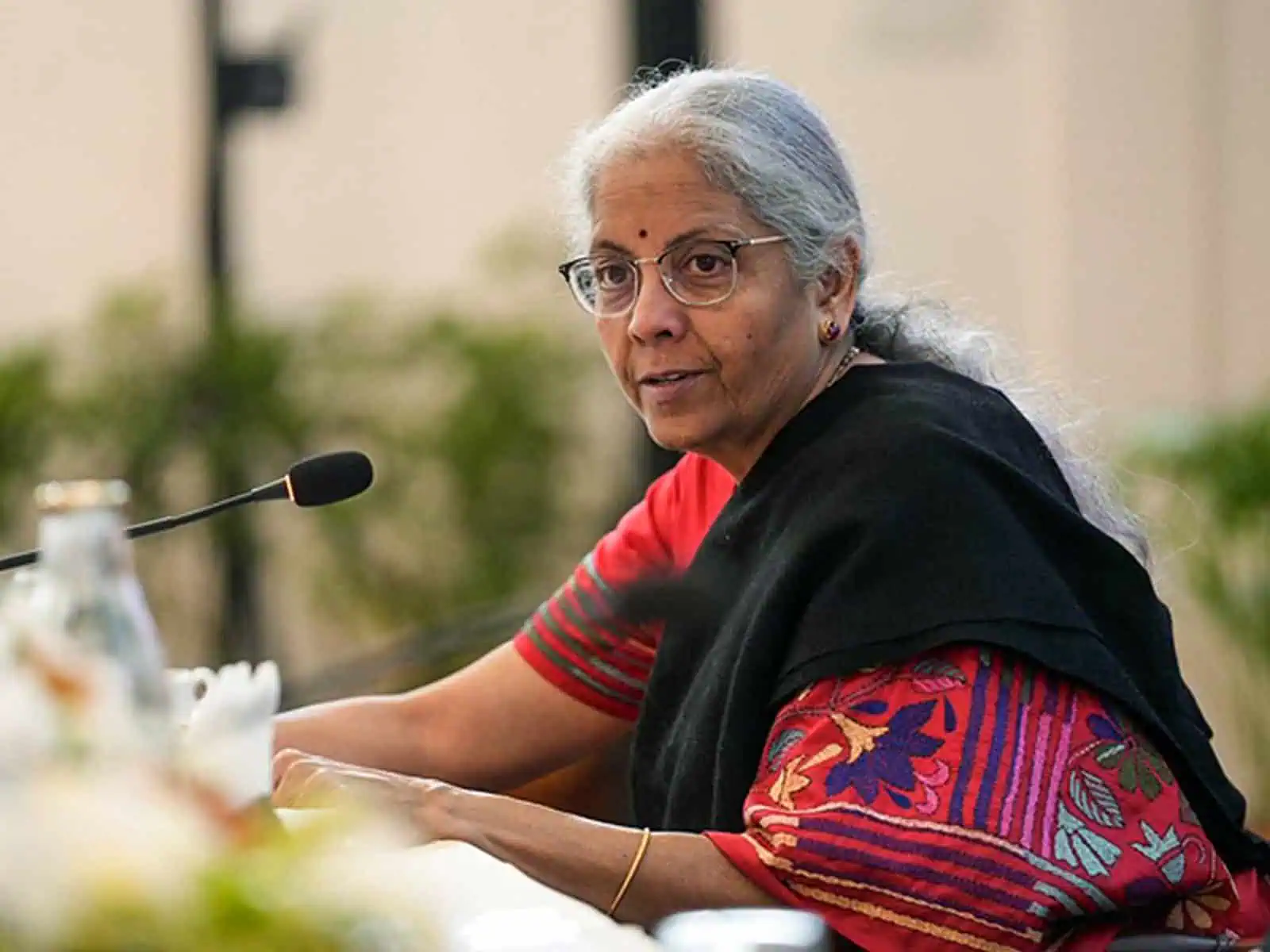
NEW DELHI: Union Minister of Finance and Corporate Affairs, Nirmala Sitharaman, tabled the Economic Survey 2025-26 in the Parliament on Thursday.
The Economic Survey says ‘India’s external sector remains strong, with deepening global integration driven by robust exports, resilient services trade, and expanding trade networks. This reflects increased competitiveness, diversification, and adaptability to global demand.’
India’s current account structure reflects a merchandise trade deficit offset by strong net inflows of invisibles, led by rising surpluses in services and private transfers. In H1 FY26, the Current Account Deficit (CAD) moderated to USD 15 billion (0.8 per cent of GDP) from USD 25.3 billion (1.3 per cent of GDP) in H1 FY25.
India is better positioned than its high-deficit peers, such as New Zealand, Brazil, Australia, the UK and Canada in Q2 FY26.
Economic Survey notes that India remained the world’s largest recipient of remittances, with inflows reaching USD 135.4 billion in FY25, supporting stability in the external account. The share of remittances from advanced economies increased, reflecting a growing contribution from skilled and professional workers.
India has consistently attracted sizeable gross investment inflows, amounting to 18.5 per cent of GDP in FY25, even amid tightening global financial conditions. According to UNCTAD data, India remained the largest recipient of gross FDI inflows in South Asia and surpassed major Asian peers such as Indonesia and Vietnam.
India ranked fourth globally in Greenfield investment announcements in 2024, with over 1,000 projects and emerged as the largest destination for Greenfield digital investments between 2020-24, attracting USD 114 billion. In April-November 2025, gross FDI inflows rose to USD 64.7 billion, up from USD 55.8 billion in April-November 2024. This highlights sustained investor confidence despite a subdued global environment and reflects the underlying strength of India’s digital economy.
India’s FPI pattern shows recurring cycles of inflows and outflows, with significant shifts often linked to global financial changes. The data indicate volatility, with six months of net outflows and three months of net inflows, resulting in a modest net balance for the year-to-date.
The swift return of inflows during these periods highlights that foreign investors’ medium-term view of India remains positive, even though their short-term allocations are influenced by high valuations of Indian stocks and global uncertainty.
India’s foreign exchange reserves increased to USD 701.4 billion as of 16 January 2026, up from USD 668 billion as of the end of March 2025. In terms of adequacy, the reserves are sufficient to cover around 11 months of goods imports and about 94 per cent of the external debt outstanding at the end of September 2025, providing a comfortable liquidity buffer.
Indian rupee (INR) depreciated by approximately 5.4 per cent against the US dollar between 1 April 2025 and 15 January 2026. Economic Survey notes that currency performance is determined by the economy’s ability to generate domestic savings, sustain external balance, attract stable FDI, and build export competitiveness rooted in innovation, productivity and quality.
India’s external debt stood at USD 746 billion at the end of September 2025, up from USD 736.3 billion at end-March 2025, while the External Debt to GDP ratio stood at 19.2 per cent at the end of September 2025. Furthermore, external debt accounts for less than 5 per cent of India’s total debt, mitigating external sector risks.
At the end of December 2024, India accounts for only 0.69 per cent of global external debt, underscoring its relatively small contribution to global indebtedness.
Economic Survey emphasises that a unified effort to reduce manufacturing costs is required for enhancing India’s export competitiveness. Further, durable external resilience and stronger currency credibility can emerge from augmenting manufacturing export capacity, supported by a disciplined, productivity-oriented industrial policy, careful management of input costs across value chains, and the complementary growth of high-value services. (ANI)
Also Read: India tops list of recipient countries for remittances with $129 bn inflow in 2024