For Ghosh, food is both archive and passport; it is a way of tracing where we come from and where we belong
Vinaya Patil
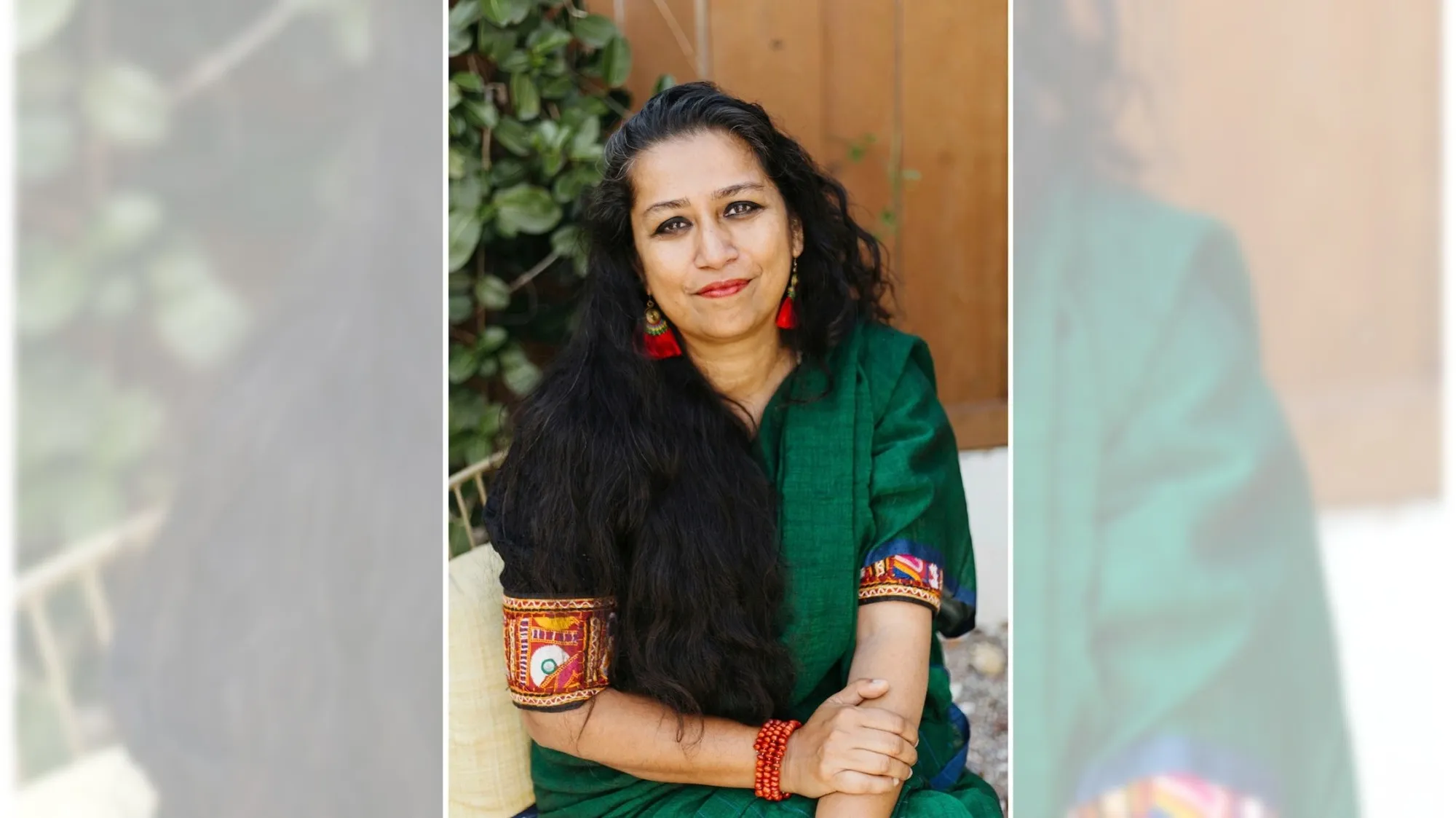
When author Madhushree Ghosh took the stage at the South Asian Literature & Art (SALA) Festival in the Bay Area this weekend, she wore several hats: author, scientist, essayist, community builder and moderator. Over September 26 and 27, the SALA festival 2026 brought together writers, artists, filmmakers and thinkers from across the South Asian diaspora at the Menlo College in Atherton. Ghosh, who moderated a number of the festival’s conversations, also arrived with a new book that brings together many of the questions that have animated her work: food, migration, memory, identity and home.
Her new book, SAFAR: Finding Home, History and Culture through Punjabi Food in the American West, follows Punjabi migration through the American West and examines how food traveled with communities of farmers, soldiers, truck drivers, restaurant owners and dhaba cooks. Ghosh’s research takes her into the histories of several waves of migration, including Punjabi-Mexican families, while also turning inward to her own experience as a Bengali immigrant in America, many years ago.
The journey began, in part, with homesickness.
Ghosh came to the United States as a 21-year-old graduate student and, “did not even know how to use a pressure cooker,” she tells the India Post. Food became a way of reconnecting with the home (New Delhi for her) she had left behind. What began as necessity gradually became curiosity, experimentation and eventually a way of understanding immigrant histories.
Today, Ghosh lives in San Diego, close to California’s farming communities, and her cooking reflects the many places and cultures that have shaped her. She can take an unfamiliar vegetable such as Chayote (a pear-shaped fruit from the gourd family) and turn it into an Indian-style curry, she tells us. “Tater tots become something resembling aloo pakodas. The point is not to allow food to travel and adapt,” she stresses.
For Ghosh, there is no simple definition of “authentic” food. Food, like language, changes as it moves from one place to another and responds to the needs and desires of the people who eat it. Punjabi food in California, therefore, cannot be separated from California itself.
That idea is central to SAFAR. Ghosh describes herself as both Indian and American — an identity that has evolved rather than been replaced.
“I thought I would just be an Indian. I am, but I am also now American in many ways,” she says, adding, “I am proud of what we have created in this country.”
The book’s Punjabi stories also gave Ghosh a way to look at immigrant identity beyond her own Bengali background. Her subjects include communities whose histories have been shaped by repeated migration, displacement and discrimination, but also by ingenuity and persistence. Punjabi immigrants established farms, restaurants and dhaabas, took academic jobs and built lives in places far from the subcontinent. Some, who migrated in the last century, married Mexican women many years ago, creating families and food traditions that crossed cultural boundaries.
The result, in Ghosh’s telling, is neither a story of cultural preservation nor one of cultural loss. It is a story of transformation.
That same instinct toward conversation runs through Ghosh’s work outside her books. Through KhabaarCo, her culinary-literary salon, she brings writers, chefs, activists and communities together around food. A meal, she believes, can accomplish something that a formal literary discussion sometimes cannot. “It gives people a reason to sit together and creates an opening for conversations that might otherwise never happen,” she insists.
She believes that food, while carrying histories, can make those histories approachable. It offers a vocabulary for talking about longing, displacement and belonging without reducing people to those experiences.
Ghosh brings another perspective to those conversations from her career as a woman in science. She works in oncology diagnostics and has spent roughly two decades mentoring women leaders in science. She has spoken about the disparities women of color encounter in scientific workplaces, including differences in pay and the ways women, “particularly South Asian women, can learn to make themselves smaller in professional rooms.”
Her response is characteristically direct. Rather than shrinking, she says, she prefers to be “a dog who won’t let go of the bone.”
That determination also informs her writing. Ghosh works across memoir, journalism, history and food writing, and has written for publications including The New York Times. She is currently working on a deeply researched journalistic project about estrogen, bringing her scientific training into conversation with her identity as a memoirist and journalist.
Her interest in identity extends beyond national borders. As someone who speaks seven languages herself, she talks about the ways caste and other forms of hierarchy can surface in literary and cultural spaces. Being in the US, she says, dilutes some intensity of that hierarchy for her, she affirms. She believes that the South Asian diaspora is not a single, uniform community; its food, histories and experiences are shaped by region, class, caste, migration and circumstance.
Perhaps that is why SALA feels particularly personal to her.
“SALA has a piece of my heart,” Ghosh says, describing it as a gathering of “South Asian curious folk.” The festival’s conversations offer another version of the table she has created through her writing and culinary work. It is a place where people can bring different histories into the same room.
When asked if there was one dish Ghosh could place on the table of every Indian immigrant family in America, her choice would not be an elaborate Punjabi feast. “It would be dal chawal, mostly moong dal, simply seasoned with jeera and green chili, finished with lime juice,” she describes.
Simple, familiar, adaptable.
Perhaps it is also the best expression of the journey Ghosh traces through SAFAR: food can carry where we came from, absorb where we have been, and still leave room for where we are going.
Also Read: Indian-origin barrister Varun Ghosh appointed to Australian Senate