A business trip can look simple on paper: book a flight, reserve a hotel, attend meetings and return home. In reality, every trip can involve approvals, changing schedules, invoices, travel policies, and unexpected disruptions. When these tasks are handled separately, employees spend more time arranging travel and finance teams spend more time sorting through expenses. A structured approach to business travel can make the entire process easier for everyone involved.
The scale of corporate travel in India also shows why companies need a more organised approach. According to the Global Business Travel Association’s 2025 Business Travel Index, India is projected to reach approximately $48.3 billion in business travel spending in 2026, representing year-over-year growth of 12.5%. The broader APAC region is also projected to reach $700.9 billion in business travel spending during 2026, with India among the markets expected to record strong growth.
As employee travel increases, businesses have to think beyond simply finding tickets and hotels. They need processes that provide control without making travel unnecessarily difficult for employees.
Why Employee Travel Can Become Difficult to Manage
Travel becomes complicated when different employees follow different booking habits. One person may book directly with an airline, another may use a travel website, while someone else may ask an administrator to arrange everything. This creates scattered records and makes it harder for the company to understand how much it is actually spending on travel.
The problem becomes more noticeable when a company has employees travelling frequently across different cities. Finance teams have to match invoices with travellers, managers need to approve expenses, and employees may have to explain bookings that fall outside company policies. A process that works for five travellers may become inefficient when the number reaches fifty or five hundred.
Create a Clear Travel Policy
A practical travel policy gives employees a simple framework for making decisions. It can define acceptable flight classes, hotel categories, booking timelines, spending limits and approval requirements without turning every trip into an administrative exercise.
The policy should also distinguish between different types of travel. A senior employee travelling internationally for an important client meeting may have different requirements from someone travelling for a short domestic meeting. Giving employees clear rules in advance reduces confusion and allows managers to focus on genuine exceptions instead of reviewing every ordinary booking.
Keep Booking and Approval Connected
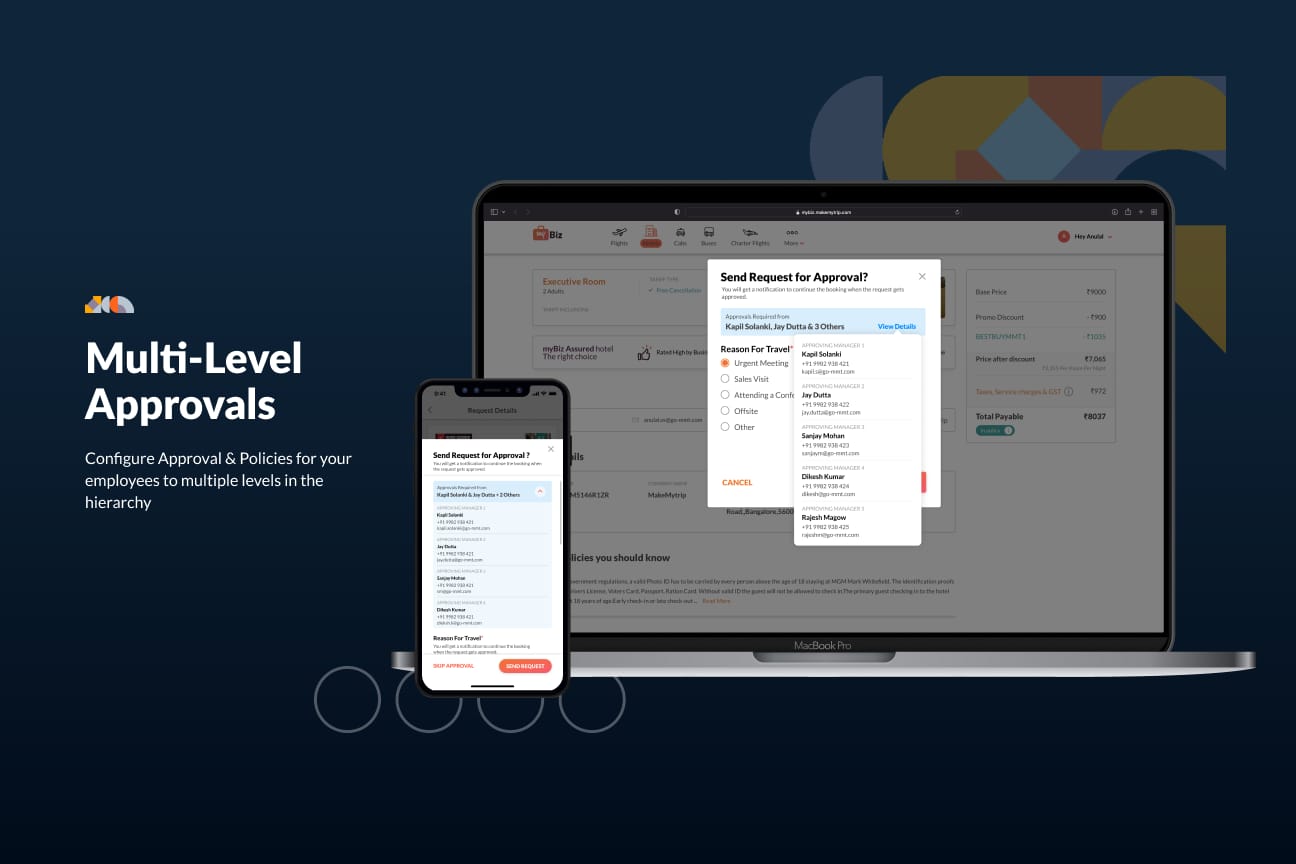
One of the easiest ways to reduce unnecessary work is to bring booking and approval into the same process. Employees should be able to submit a travel request, receive the required approval, and arrange eligible travel without repeatedly switching between different systems or communicating with several people.
This also gives companies better visibility into upcoming travel. Managers can see where employees are travelling, finance teams can understand expected spending, and administrators can identify potential policy issues before money is spent. The result is a smoother process rather than a series of disconnected tasks.
How myBiz by MakeMyTrip Can Simplify Corporate Travel
For businesses managing regular employee travel, corporate business travel management can bring booking, policy control, and travel visibility into a more organised workflow. Instead of leaving every employee to manage travel independently, companies can establish a central process that makes approved travel easier to arrange and track.
A centralised system can also make everyday administration less tiring. Employees can spend less time searching across different platforms, while companies can maintain greater visibility over bookings and expenses. For growing organisations, this becomes particularly useful because travel processes can become more difficult to manage as teams expand across locations.
Make Expense Management Part of the Process
Booking travel is only one part of the employee journey. Once the trip is over, employees still need to submit expenses, finance teams need to verify them and companies need to maintain accurate records. If these activities happen through disconnected processes, administrative work can continue long after the employee returns.
A better approach is to connect travel information with expense management wherever possible. This helps companies compare planned spending with actual spending and identify recurring areas where costs can be controlled. It can also make reimbursement easier for employees because they do not have to reconstruct every detail of a trip from memory.
Use Data to Understand Travel Spending
Once travel information is organised, companies can start using it to make better business decisions. Travel data can reveal which destinations employees visit most often, where spending is increasing and which types of trips generate repeated costs.
For example, a company might discover that employees frequently travel to the same city but make bookings at different rates. That information could encourage the business to review preferred hotel arrangements or improve advance booking practices. Data does not need to make travel restrictive. Used properly, it can show where simple changes could make travel more predictable.
Prepare for Changes and Disruptions
Flights can be delayed, cancelled or rescheduled, while meetings can move with very little notice. Employees travelling for important business activities need support when plans change, particularly when they are in an unfamiliar city.
Companies should therefore consider disruption management when designing their travel process. Employees should know whom to contact when something goes wrong, while travel teams should have sufficient visibility to help resolve issues quickly. A good travel process is not only about making the original booking. It should also provide support when the original plan stops working.
Give Employees Convenience Without Losing Control
There is often a perceived conflict between employee convenience and company control. In practice, the two can work together when the process is designed properly. Employees want freedom to arrange necessary travel without unnecessary approvals, while businesses need visibility over spending and compliance.
The solution is to make approved choices easy to access. When employees can quickly find options that already fit company policies, they have less reason to search elsewhere. Companies can maintain control while employees get a smoother experience, which is particularly valuable when travel is frequent.
Build a Travel Process That Can Grow
A travel process should not be designed only for the company’s current size. A small organisation may manage travel through email and spreadsheets for a while, but those methods can become difficult to maintain as the workforce and number of trips increase.
Technology can help create a more consistent structure as the organisation grows. With clearer policies, centralised booking information, approval workflows and better expense visibility, companies can reduce repetitive administrative work while maintaining oversight. This creates a foundation that can support more employees without requiring the same increase in manual effort.
A Simpler Journey for Employees and Businesses
The goal of business travel management is not to make employee travel more complicated. It is to remove the unnecessary complications that appear when bookings, approvals, expenses and support are handled separately. A well-designed process gives employees clarity while giving companies the visibility needed to manage costs.
As India’s business travel market continues to expand, companies have a practical reason to improve these processes now. myBiz by MakeMyTrip can help businesses bring greater structure to corporate travel, making everyday travel easier to manage while supporting better visibility and control.
Making Business Travel Easier to Manage
Business travel will remain an important part of how companies build relationships, meet customers and expand into new markets. The challenge is managing that travel without creating unnecessary work. Clear policies, connected processes, useful technology and better spending visibility can make employee travel more convenient while helping companies stay organised as their travel needs grow.
Also Read: Holiday Calendar Economics: How Public Holidays are reshaping India’s travel economy