
Vidya Sethuraman
India Post News Service
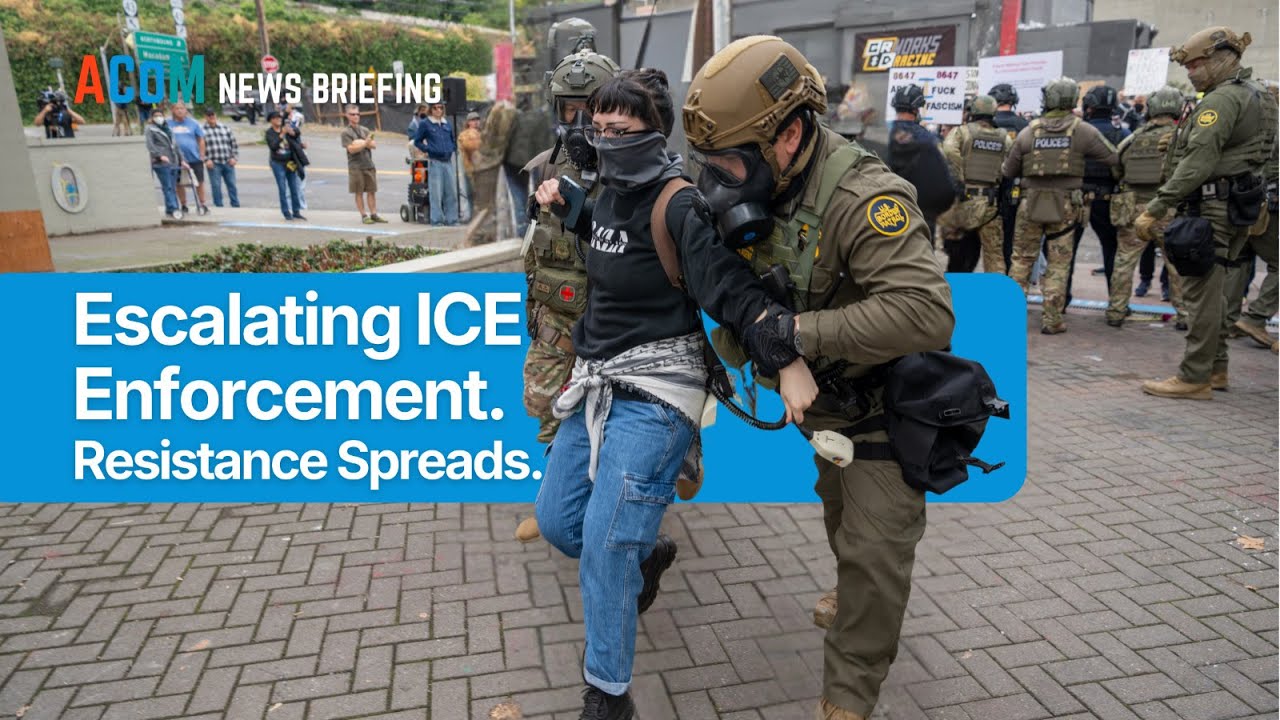
As immigration enforcement actions intensify across the country, communities are responding with a growing wave of resistance from lawsuits and civil rights complaints to school-based organizing and coordinated local defense efforts. American Social Media (ACoM) held an online briefing on the Jan 23rd, invited immigrant rights advocates, community organizers, legal scholars, and immigration lawyers to discuss how communities can respond to the increasingly risky enforcement environment nationwide through legal action, school protection, mutual aid networks, and organized action.
Amanda Otero, parent from Minnesota Public Schools, and co-executive director of Take Action Minnesota shared that local parents and community members quickly organized “shelter school” initiatives, patrolling around schools to ensure students could safely enter and leave. They also provided assistance through community networks, offering transportation, food, rent, and utility subsidies to immigrant families who were afraid to leave their homes. She noted that over 1,000 parents within the Minneapolis Public School system alone participated in these initiatives, and this model is spreading to other school districts across the state.
Vanessa Cárdenas, Executive Director of the immigration advocacy group America’s Voice, pointed out that the recent immigration enforcement operation in Minnesota is one of the largest deployments in U.S. history, with the federal government mobilizing nearly 3,000 law enforcement personnel to a single city. She stated that this shows the federal government is unlikely to back down in the short term, and the official claim that it is “only targeting felons” has been shattered in reality, with the enforcement action impacting overall community safety and basic rights.
Seri Lee, Deputy Director of the Chicago community organization ONE Northside, stated that the area faced a rapid deployment of hundreds of Immigration and Customs Enforcement (ICE) officers, prompting the community to quickly shift its strategy to one centered on “rights education, community defense, and mutual support.” She explained that the organization implemented “Know Your Rights” training, ICE officer identification, a hotline, and door-to-door mobilization of residents to participate in watchdog operations. This enabled the community to respond promptly to unexpected law enforcement situations, while also mobilizing hundreds of volunteers to provide support such as transportation, shopping, childcare, and payment of living expenses.
Mark Tushnet, Professor Emeritus at Harvard Law School, points out that during the era of the “Fugitive Slave Laws” in the 19th century, street interventions and legal battles also occurred in Northern cities. Although these often failed to immediately stop the system from functioning, they successfully ignited public opinion and promoted broader social change. He believes that the significance of current street actions and legal challenges lies not only in whether they are won, but also in revealing the injustice of the system and prompting more people who were previously uninvolved to rethink the boundaries between state power and civil rights.
Also Read: Former US VP Harris expresses outrage as immigration agents detain five-year-old boy