Vidya Sethuraman
India Post News Service
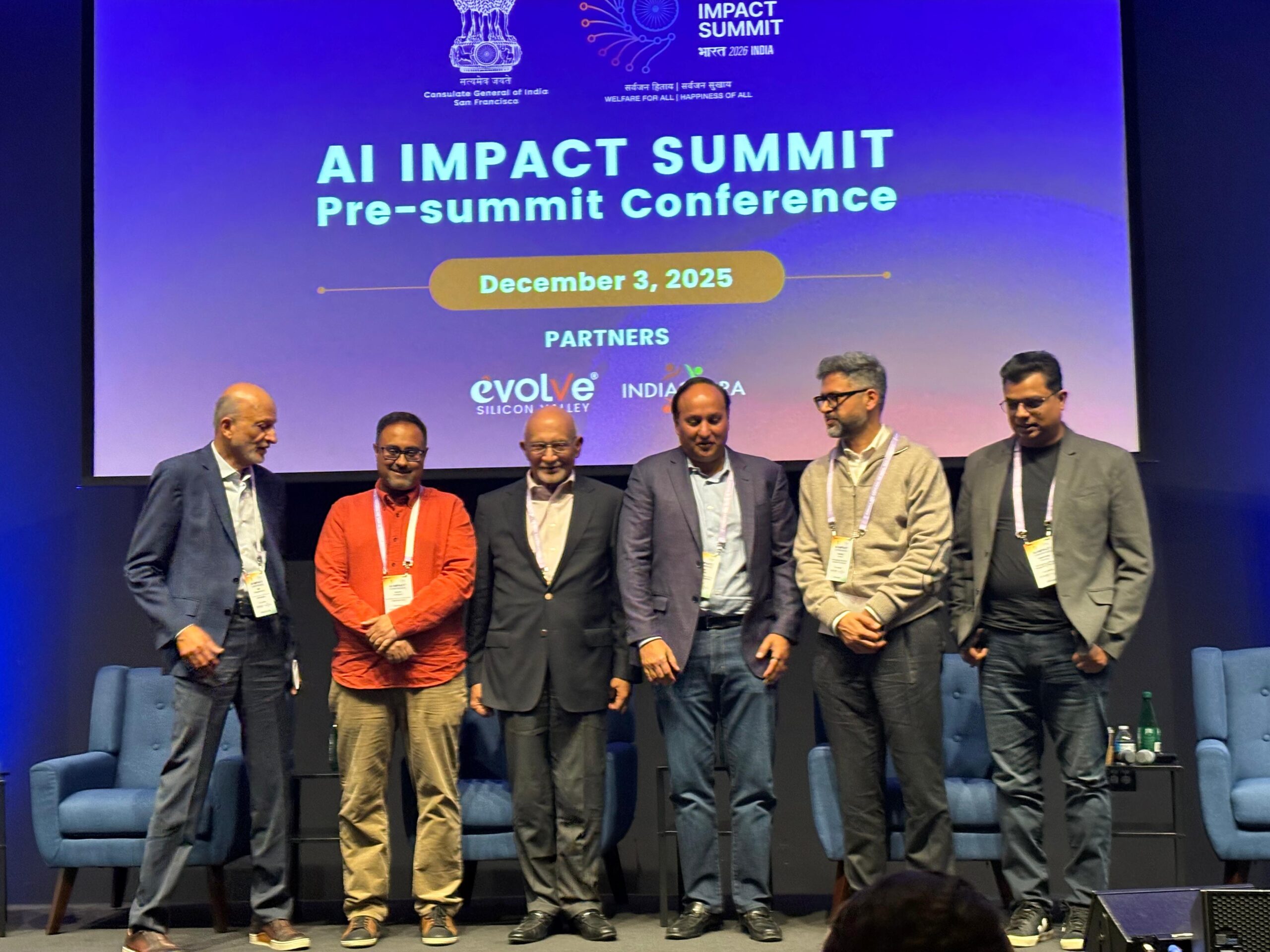
SAN FRANCISCO, CA: The Consulate General of India in San Francisco hosted a high-profile Pre-Summit Conference on Dec 3 on Artificial Intelligence, bringing together global technology leaders, policymakers, investors, and innovators to explore the future of responsible and inclusive AI. The event featured engaging dialogues on human-centric innovation, sustainable intelligence, and the role of emerging technologies in building equitable global ecosystems. The event was hosted by CGISF Dr Srikar Reddy in collaboration with EvolveSVF and Indiaspora.
 The conference opened with a Welcome Address by Dr. K. Srikar Reddy, Consul General of India in San Francisco, followed by a Special Address from Ambassador Namgya Khampa, Deputy Chief of Mission at the Embassy of India, Washington D.C., setting the stage for a day of thought-provoking discussions. “The question before us is no longer whether AI will transform our world, but how it will do so, and for whom. India approaches this moment with intentionality and purpose. We in India choose a future in which AI empowers people, protects our planet, and accelerates inclusive progress,” Khampa said.
Dr Srikar Reddy, CGISF said the Bay Area conference drew more than 600 participants, including representatives from Nvidia, Microsoft, Google, Salesforce, venture capital firms, and startups. The purpose of organizing the pre-summit event in the U.S. is to ensure participation of the AI companies in the conference in India, Reddy said. Dr Reddy said the summit is anchored in the principles of “People, Planet, and Progress,” stressing that India’s goal is to ensure AI drives inclusive development. “We are bringing together governments and leading experts from 100 countries to shape actionable recommendations that ensure AI does not deepen global divides but delivers measurable, inclusive impact for all,” he said.
India will host the AI Impact Summit 2026 from 16–20 February in New Delhi, marking the first time a major global AI summit will be held in the Global South. The India AI Summit’s agenda is organized around seven thematic pillars, known as the ‘seven Chakras’: Human Capital, Inclusion, Safe & Trusted AI, Resilience, Innovation and Efficiency, Democratizing AI Resources, and AI for Economic Development and Social Good.
A powerful keynote address was delivered by Vinod Khosla, Founder of Khosla Ventures, highlighting the transformative potential of AI and the global responsibility shared by nations and industries in shaping its trajectory. “AI will be the most important technology humanity has ever created. Its potential to accelerate scientific discovery, improve healthcare, transform education, and expand human capability is limitless. What matters now is how quickly and responsibly we implement it.” “Within the next 15 years, almost all expertise on the planet will be free, including medical, legal, scientific and educational services, and this is something people have a hard time accepting. By 2050, an abundant economy globally, not just in India or the U.S., is possible. Khosla also underscored that the biggest risk is not embracing AI fast enough, urging governments, industry, and academia to collaborate on responsible deployment without slowing innovation.
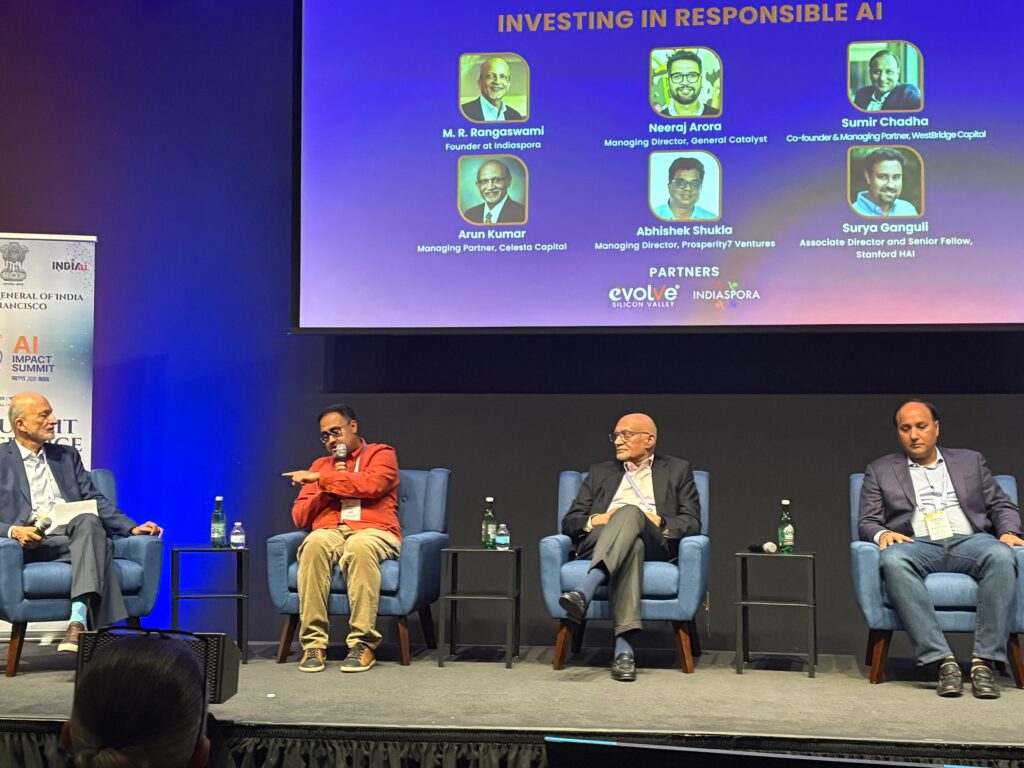
MR Rangaswami, Founder of Indiaspora, said the summit aims to engage the Indian diaspora in global AI discussions. “AI impact is a natural transition,” Rangaswami said. “The government of India is geared up because it’s looking for opportunities. This summit is meant to start those discussions and get the diaspora involved. Indiaspora is partnering this event to get the diaspora fully engaged in the U.S. and all the other countries so that we can be a force, and a bridge between India and the rest of the world.”
Dr Romesh Japra, Chairman, FIA and Founder, A4H said by integrating AI into policymaking, governments can harness data-driven insights to craft smarter laws, anticipate societal challenges before they arise, and deliver more efficient, equitable services. AI isn’t just a tool, it can be the compass guiding public policy toward justice, sustainability, and greater social welfare.
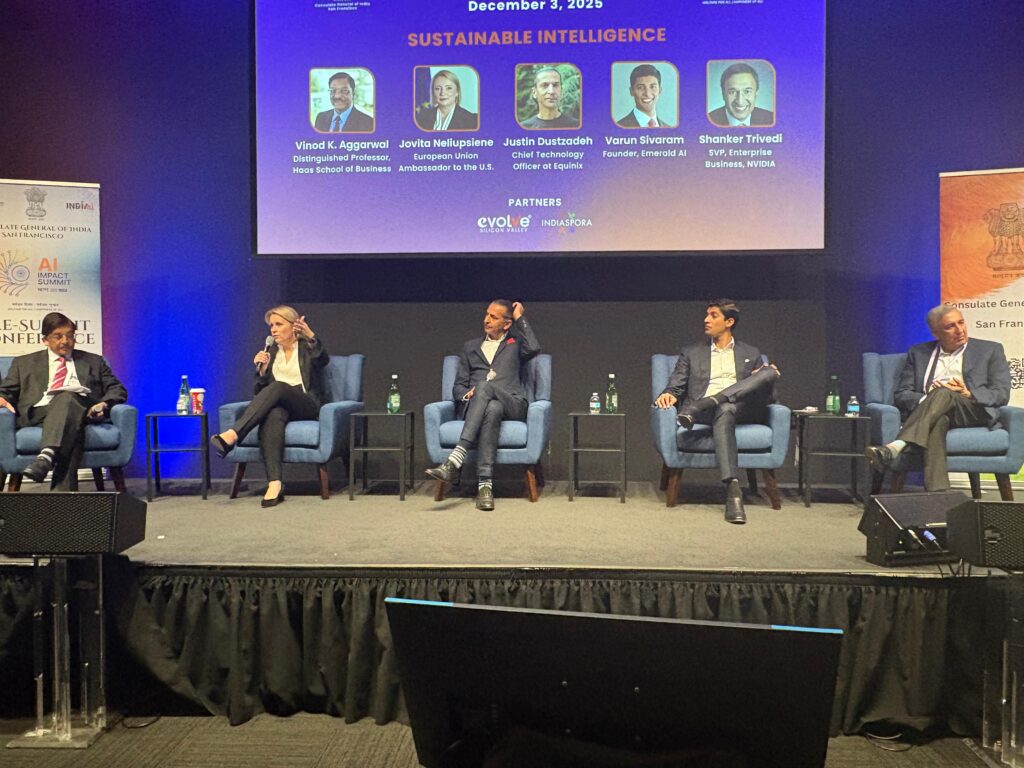
Jovita Neliupšienė, Ambassador of the European Union to the United States, spoke on EU-India digital cooperation. “EU and India have very robust relations. We are negotiating a trade agreement. I believe that our cooperation, whether in AI or other digital areas, is extremely important because we are significant digital markets and we are democratic.
AI may be transforming every industry, but Vishal Sikka, former Infosys CEO, believes the next phase of progress must focus on trust. He said building “trustworthy and reliable” systems means creating AI models that recognize when they are uncertain and defer to humans in those moments.