
Ashok Kaura
India Post News Service
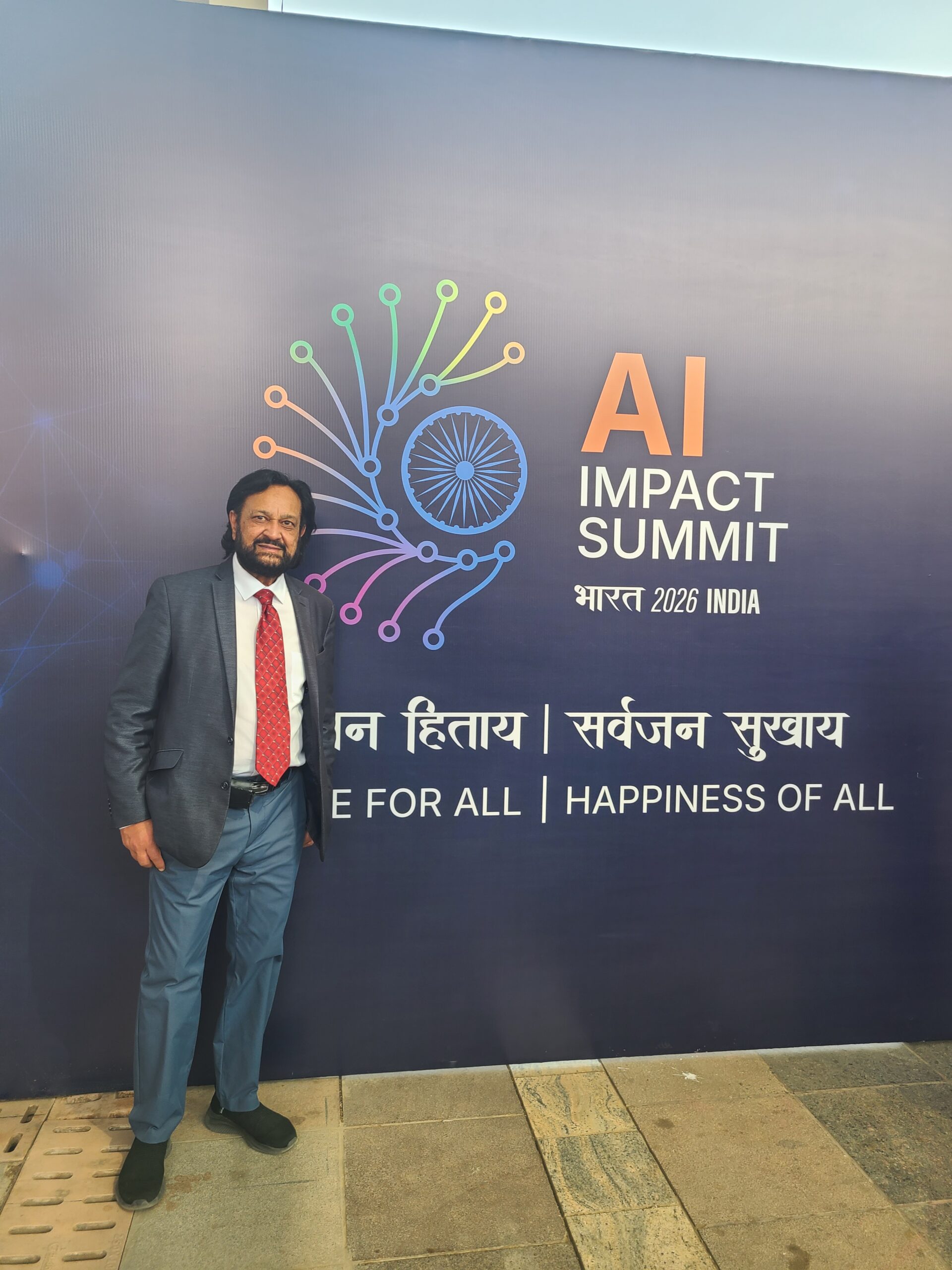
PHAGWARA/DELHI: California based, Phagwara-born, Dr. Romesh Japra, Founder and Chairman of Americans4Hindus (A4H), while participating in India-AI Summit 2026 in New Delhi, delivered a detailed perspective on the ethical and democratic responsibilities accompanying the rapid expansion of AI technologies has emphasized that India is not merely participating in the AI revolution but is positioned to influence its moral and strategic direction globally.
In his address Dr Japra said “The India–AI Impact Summit 2026” brought together an influential assembly of global leaders, policymakers, technologists, and innovators at India Mandapam, underscoring India’s growing role in shaping the global direction of Artificial Intelligence. Convened under the leadership and invitation of Prime Minister Narendra Modi, the summit focused on advancing AI from conceptual dialogue to measurable, real-world impact grounded in ethics, accountability, and inclusive growth.
In his remarks, Dr. Japra described the summit as a “defining global inflection point,” stressing that artificial intelligence must remain anchored in human values. He articulated that AI systems must be designed to serve civilization, protect democratic institutions, and elevate human potential rather than replace or undermine it. He further highlighted the importance of establishing globally coordinated ethical standards to ensure transparency, fairness, and accountability in AI deployment across sectors.
Addressing the transformative role of AI in healthcare, Dr. Japra detailed how predictive diagnostics can enable early disease detection, significantly improving survival rates and reducing healthcare costs. He noted that AI-assisted robotic precision in surgeries is enhancing procedural accuracy while minimizing recovery time for patients. Additionally, he pointed to the growing potential of personalized and precision medicine, where AI-driven data analytics can tailor treatments to individual genetic profiles, ultimately redefining patient care outcomes. However, he cautioned that equitable access and patient data protection must remain central to implementation strategies.
On governance and democracy, Dr. Japra emphasized that AI can strengthen transparent, data-driven decision-making processes in public administration. He outlined how responsible AI tools can improve policy analysis, enhance civic engagement, and increase institutional accountability. At the same time, he warned against the risks of algorithmic bias, misuse of data, and insufficient oversight, calling for robust legal frameworks and ethical guardrails to safeguard democratic systems.
The summit’s central theme, “From Vision to Action: India Leading the AI Impact Movement,” was structured around three pillars — People, Planet, and Progress — reinforcing the need for technology that empowers humanity, aligns with sustainability goals, and promotes inclusive economic development.
Americans4Hindus reaffirmed its commitment to supporting ethical and responsible AI innovation, strengthening democratic institutions, and advancing U.S.–India collaboration for global progress. Dr. Japra underscored that technological leadership must be accompanied by moral clarity and international cooperation.
As the India–AI Impact Summit 2026 concluded, participants characterized the gathering as a decisive step toward operationalizing AI in ways that prioritize human dignity and shared prosperity. For Dr. Romesh Japra, whose journey began in Phagwara, the summit represented both a personal and professional milestone — reflecting India’s expanding influence in shaping the global future of artificial intelligence.
Also Read: Dr Romesh Japra recognized at Nobel Peace Center in Oslo