International symposium brings together physicians, researchers and experts from the United States, India, the United Kingdom and Mauritius
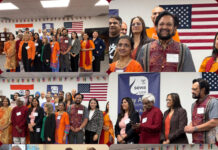
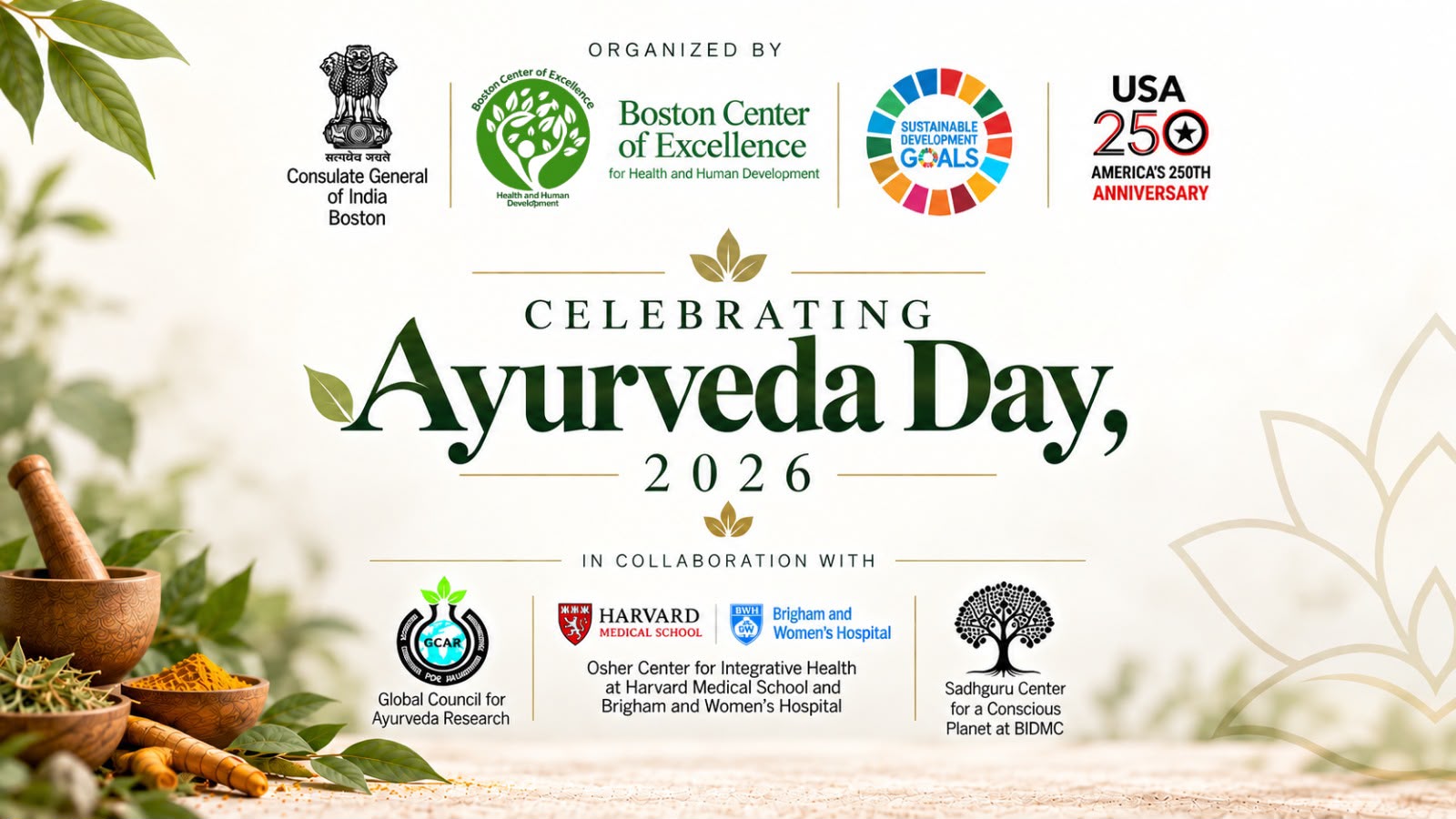
BOSTON, Massachusetts: International Ayurveda Day 2026 was celebrated in Boston with a half-day symposium bringing together physicians, researchers, Ayurveda and Yoga experts, academicians, entrepreneurs and community leaders from the United States, India, the United Kingdom and Mauritius.
The symposium, “Reimagining Global Well-Being Through Ayurveda,” was organized by the Boston Center of Excellence for Health & Human Development (BoCE) at the Brigham and Women’s Health Care Center in Chestnut Hill. Brigham and Women’s Hospital is a major teaching affiliate of Harvard Medical School.
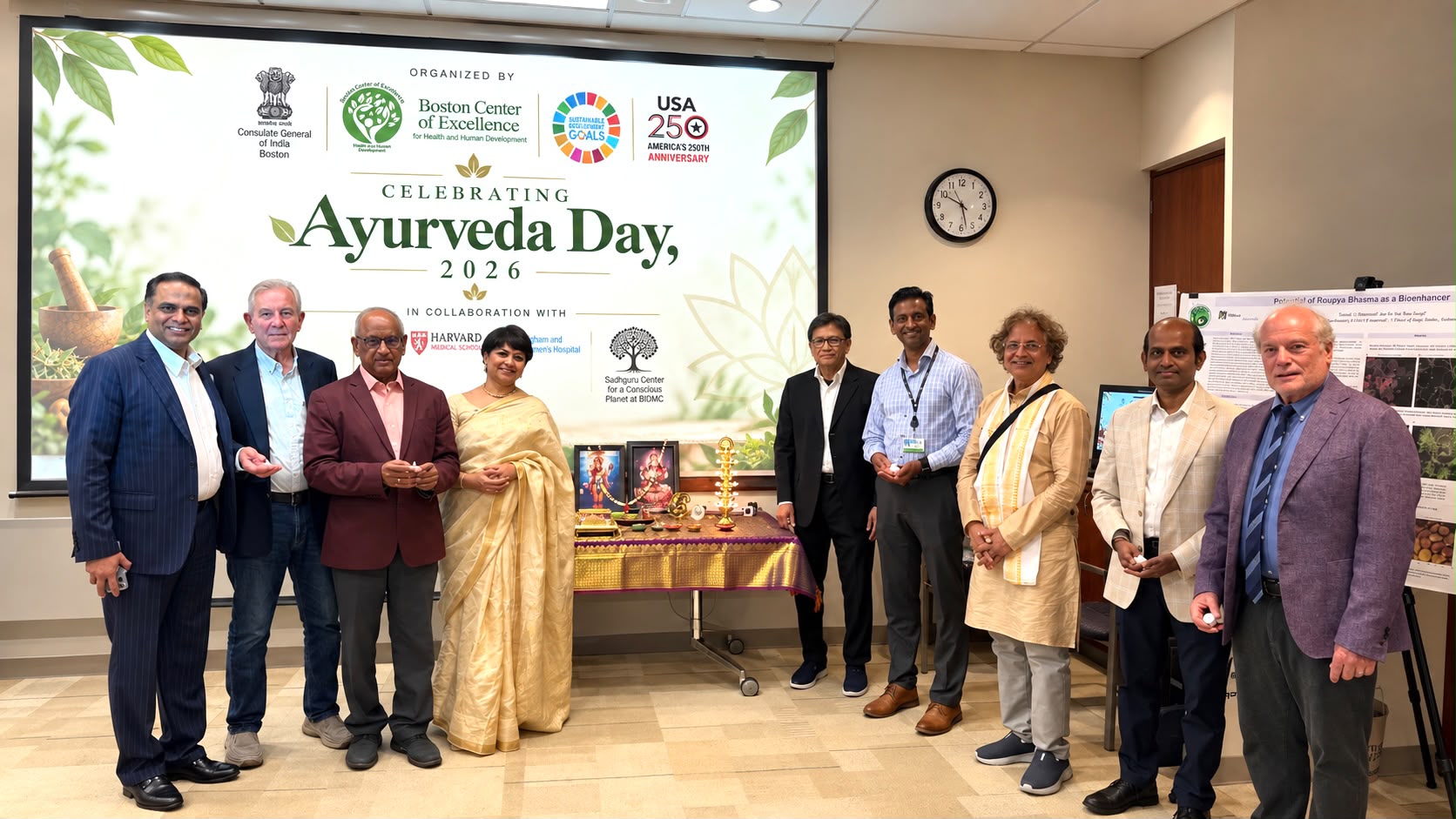
The celebration began in the traditional Indian way with Dhanvantari and Saraswati prayers recited by Dr. Pratibha Shah, Founder of the Global Council for Ayurveda Research (GCAR), and Dr. Sharanya, followed by the ceremonial lighting of the lamp by distinguished guests and speakers.
The program was held with the participation and support of the Consulate General of India, Boston, and in collaboration with the Global Council for Ayurveda Research (GCAR); Osher Center for Integrative Health at Harvard Medical School and Brigham and Women’s Hospital; and Sadhguru Center for a Conscious Planet at Beth Israel Deaconess Medical Center. The symposium was also supported by Relax Infinity and Global Citizen Forum.
Its focus on preventive healthcare, mental well-being and access to quality healthcare reflected the broader objectives of the United Nations Sustainable Development Goals, particularly SDG 3: Good Health and Well-Being.
Pramit Maakoday, Co-Founder of BoCE and Host of the symposium, welcomed participants and highlighted the Center’s 12-year mission of “bringing the best of the East and the best of the West together.”
“Our goal is to explore affordable, accessible and quality healthcare solutions by bringing together modern medicine, Ayurveda, Yoga, preventive care, mental well-being and emerging technologies to help people live happier and healthier lives beyond 100,” Maakoday said.
Global Experts Bring Modern Science and Traditional Wisdom Together
The symposium featured perspectives from modern medicine, Ayurveda, Yoga, integrative health, preventive care and longevity.
Dr. Bala Subramaniam of Harvard Medical School presented research on nervous-system regulation, mind-body health and their relevance to contemporary medical practice, while Dr. Darshan Mehta of Harvard Medical School discussed evidence-based integrative health and the growing role of mind-body approaches in medical education and patient care.
Dr. Krishna Bhatta, FRCS (London), presented his “Krishna’s 5 Yuktas” framework, drawing upon the Bhagavad Gita to explore lifestyle choices, balance and personal well-being.
Prof. Dr. Tanuja Nesari, Director of the Institute of Teaching and Research in Ayurveda (ITRA), Jamnagar, an Institute of National Importance in India, highlighted evidence-based Ayurveda, research, education and international collaboration.
Dr. Jay Glaser, an internist and Ayurvedic scholar, discussed whole-plant medicine and the scientific value of studying complete botanical formulations alongside isolated compounds. Dr. Pooja Sabharwal contributed perspectives on Ayurveda, health and well-being from Mauritius.
Padma Shri Dr. H. R. Nagendra, Founder and Chancellor of S-VYASA University and an internationally recognized Yoga scholar, delivered a special address from India on the contribution of Yoga and Ayurveda to health and well-being.
From the United Kingdom, Amarjit Singh Bhamra, a prominent advocate for Ayurveda and traditional medicine, addressed the gathering virtually and offered a European perspective on the growing international interest in traditional medicine.
 Bringing the Best of East and West Together
A central theme of the symposium was that modern medicine and traditional systems of health need not be viewed as competing approaches. Discussions explored how contemporary medicine and scientific research can work alongside Ayurveda, Yoga, nutrition, preventive care and mind-body practices.
For more than a decade, BoCE has worked at the intersection of modern medicine, integrative health, technology and traditional approaches to well-being, connecting Eastern health traditions with advances in Western medicine and science.
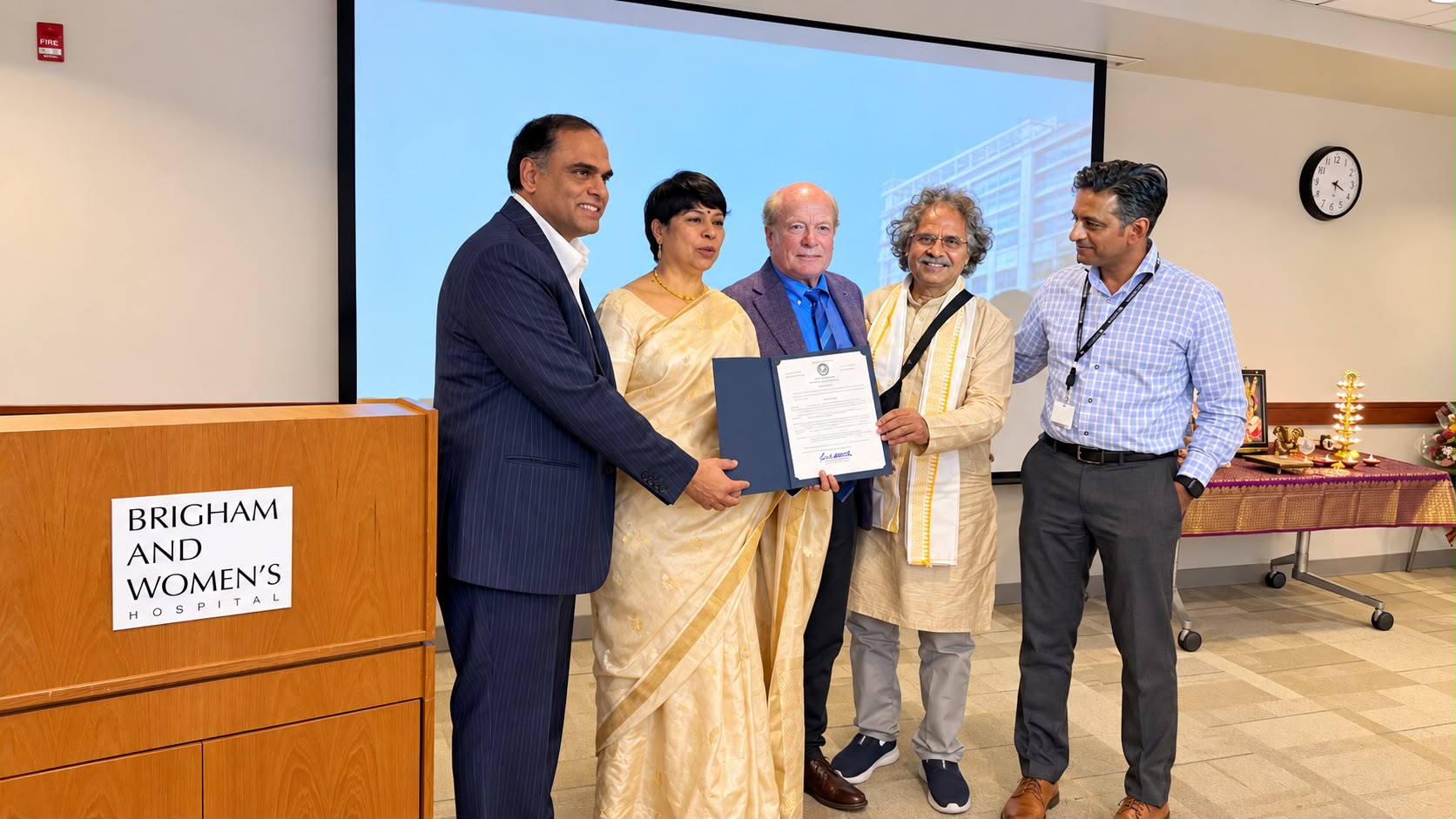
Dr. Pratibha Shah, Founder of GCAR and Co-Host and Moderator of the symposium, guided discussions among experts representing Ayurveda, modern medicine and integrative health.
Dr. Bal Ram Singh, Chairman of the Boston Center of Excellence, emphasized scientific research, education and scholarly publications as important foundations for strengthening the understanding and advancement of Ayurveda in North America.
Research, Education and the “Beyond 100” Vision
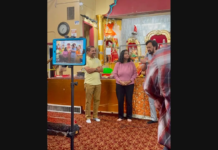
Books, research materials and publications on Ayurveda, Yoga and integrative health, including publications from the Ayurveda Journal of Health, were displayed during the symposium, giving participants an opportunity to explore contemporary scholarship in the field.
The conference also explored the “Beyond 100” vision — looking beyond lifespan alone toward healthier, active and more purposeful longevity through a combination of modern medicine, Ayurveda, Yoga, nutrition, preventive healthcare, mental well-being and technology.
Dr. B. K. Modi, entrepreneur and philanthropist from India, addressed the gathering and shared his vision of a “Happy, Healthy, Wealthy and Purposeful Life Beyond 100.”
Anil Shah, a Massachusetts-based entrepreneur and founder of MRCC Group working at the intersection of healthcare and information technology, participated as a special guest and highlighted the potential contribution of technology and innovation to the future of healthcare.
Looking Ahead
The symposium underscored Boston’s distinctive position as a global center for medicine, higher education, biotechnology, research and innovation, and the opportunities this creates for collaboration between contemporary medical science and traditional systems of health.
BoCE plans to continue connecting physicians, researchers, Ayurveda and Yoga experts, academic institutions and technology innovators from the United States, India and other countries to encourage evidence-based research, education and international collaboration in integrative health.
Reflecting the holistic spirit of Ayurveda Day, attendees concluded the gathering with a specially prepared Ayurvedic and Satvik meal.
The symposium’s broader message was that ancient wisdom and modern science can complement each other in the pursuit of affordable, accessible and quality healthcare — and healthier, happier and more purposeful lives.
Also Read: 10th National Ayurveda Day: Ancient medical tradition can help build healthy society